
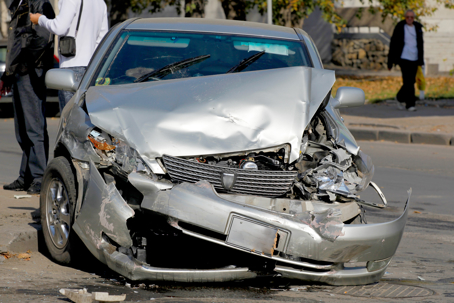
Rideshare has changed how Floridians move. It has also changed how Florida crashes happen, who is liable for them, and which insurance policies actually pay. Whether you were a passenger in an Uber, a driver hit by a Lyft, a pedestrian struck by a rideshare car, or another motorist in a multi-vehicle pileup, the rules are very different from a standard auto claim — and the dollar amounts can be much larger.
At The Watson Firm, we handle rideshare injury cases across Florida and know how Uber and Lyft, their insurers, and the drivers' personal carriers position themselves in these claims. This guide walks you through the three coverage periods, who pays in each, what your case may be worth, and the mistakes that cost rideshare victims money.
Why Rideshare Cases Are Different
In a typical Florida crash, you have two drivers and two insurance policies. In a rideshare crash, you potentially have:
The rideshare driver's personal auto policy. The rideshare company's commercial liability policy (Uber or Lyft). The rideshare company's uninsured/underinsured motorist coverage. Your own PIP and UM/UIM coverage. Sometimes a third-party at-fault driver's policy.
Which policy applies — and for how much — depends almost entirely on what the driver was doing on the app at the moment of the crash. Florida codified these rules in the Transportation Network Companies (TNC) Act under Florida Statute § 627.748.
The Three Coverage Periods
Period 0: App Off
When the rideshare driver is not logged into the app, they are an ordinary driver. Only their personal auto policy applies. If they caused the crash and have only minimum Florida coverage, the available insurance is often shockingly low.
This is a frequent source of confusion. A driver may have been "on their way to start driving" but had not yet opened the app. From an insurance standpoint, that is no different from any other driver running personal errands.
Period 1: App On, Waiting for a Ride Request
When the driver is logged into the Uber or Lyft app and waiting for a ride request, Florida law requires the rideshare company to provide at minimum:
$50,000 per person for bodily injury. $100,000 per accident for bodily injury. $25,000 for property damage.
Uber and Lyft generally provide these limits as contingent coverage — meaning the driver's personal policy is supposed to respond first, but if it denies coverage (most personal auto policies exclude commercial use), the rideshare company's policy steps in.
Periods 2 and 3: Ride Accepted and Passenger On Board
The moment a driver accepts a ride request, coverage jumps dramatically. From the time the driver accepts a trip until the passenger is dropped off, Uber and Lyft are required to maintain at least $1,000,000 in third-party liability coverage, plus uninsured/underinsured motorist coverage.
This is the period where rideshare cases become substantially more valuable than ordinary auto claims. A million dollars of available coverage is often the difference between a partially compensated victim and a fully compensated one.
Who Pays in Common Rideshare Crash Scenarios
You were a passenger in an Uber or Lyft
If the rideshare driver caused or contributed to the crash, the company's $1M liability policy is in play. If another driver caused the crash and was uninsured or underinsured, Uber and Lyft's UM/UIM coverage is in play. As a passenger, you almost always have access to one of these high-limit policies — but the carriers will not volunteer it. You have to know to ask.
You were in another car and a rideshare driver hit you
The available coverage depends on the rideshare driver's app status at the moment of impact. If they were carrying a passenger or on the way to pick one up, you may have access to the $1M policy. If they were merely logged in waiting for a request, the lower TNC limits apply. If the app was off, only personal coverage applies.
You were a pedestrian or cyclist struck by a rideshare driver
Same framework. The driver's app status drives the coverage analysis. Pedestrian and cyclist cases involving rideshare drivers in active trips have produced some of the largest rideshare settlements in Florida.
The rideshare driver was hit by someone else and you were a passenger
If the at-fault driver had insufficient coverage for your injuries, Uber and Lyft's UM/UIM coverage applies. This is one of the most valuable — and most overlooked — pieces of the puzzle.
What Your Florida Rideshare Case May Be Worth
Settlement ranges depend on injury severity and the available coverage:
Minor injuries (soft tissue, brief treatment): roughly $10,000 to $30,000. Moderate injuries (broken bones, surgery, longer rehabilitation): roughly $50,000 to $250,000. Serious or catastrophic injuries (TBI, spinal cord, permanent disability): six figures into seven figures, with the $1M Uber/Lyft policy often serving as the practical ceiling unless additional coverage exists.
Because Uber and Lyft's commercial policies are large, rideshare cases with serious injuries often resolve closer to actual case value than minimum-policy private cases, where the recovery is artificially capped by what the driver had.
What Uber and Lyft Will Not Tell You
Rideshare companies are not your advocate. Their insurance carriers are sophisticated, well-resourced, and trained to limit payouts. Common tactics include:
Disputing app status. Whether the driver was in Period 1 versus Period 2 can change the available coverage from $50,000 to $1,000,000. Carriers sometimes argue the lower period applied, and the only way to disprove it is by obtaining the rideshare company's internal trip logs — something an attorney with experience pursuing those records can force into evidence.
Pushing you to the driver's personal policy. Personal auto policies almost universally exclude commercial use. If a personal carrier accepts the claim, it usually means they will later try to disclaim coverage and leave you negotiating with a higher-limit carrier from a weaker position.
Quick lowball offers. Especially for passengers, who tend to have unambiguous injuries and clear non-fault status, early offers are often dramatically lower than the case is worth.
Independent contractor arguments. Uber and Lyft routinely argue their drivers are independent contractors, not employees. That argument limits some theories of liability but does not eliminate the commercial insurance protections required by Florida's TNC statute.
What to Do After a Florida Rideshare Crash
The general rules of any Florida crash apply — call 911, document the scene, do not admit fault, get medical care within 14 days. Layered on top of those, rideshare crashes have a few special steps:
Screenshot the app. If you were a passenger, screenshot the trip in the Uber or Lyft app — driver name, vehicle, route, fare, and trip ID. If you cannot access it later, this record can be hard to recover.
Note the app status of the rideshare driver. Was the passenger seat occupied by a paying rider? Was there a destination on a phone mount? This becomes important.
Report through the app and the company's incident channel. Both Uber and Lyft have in-app reporting tools. Use them, but do not give a recorded statement or sign anything before consulting an attorney.
Identify every involved driver and policy. In multi-vehicle rideshare crashes, every available policy is potentially in play.
Do not assume your case is small. A rideshare crash that looks like a typical fender-bender may actually carry $1M in available insurance.
How HB 837 Affects Rideshare Cases
The 2023 tort reform changes apply to rideshare cases like any other negligence claim:
You have two years from the date of the crash to file suit. Florida's modified comparative negligence 51% bar applies. Medical damages are limited to amounts paid or payable, not the full billed amount.
Two years sounds like enough time. With commercial defendants like Uber and Lyft, who have sophisticated counsel and document-management protocols, building the case takes longer than the average two-car crash. Early representation matters more in rideshare claims than in most other auto cases.
Frequently Asked Questions
Will Uber or Lyft be sued directly?
Sometimes. The companies argue their drivers are independent contractors, but Florida courts allow direct claims in certain circumstances — particularly involving negligent hiring, negligent retention, or product liability theories around the app itself. Even where the company is not a direct defendant, their insurance policy is the source of recovery.
Does my own PIP still apply?
Yes. As a Florida driver, your PIP follows you as a passenger, pedestrian, or cyclist. The 14-day medical rule still applies — see a doctor within 14 days of the crash.
What if the rideshare driver tells me to "just handle it through the app"?
Document the crash through the app, but do not rely on the rideshare company's internal claims process to value your case. They are an interested party. Talk to a Florida attorney before signing or accepting anything.
Can I sue if the rideshare driver was at fault and a passenger in another car was hurt?
Yes — and the at-fault rideshare driver's coverage period determines which policy responds. Even if the driver had only personal auto insurance, Uber and Lyft's contingent coverage may apply.
What if the crash happened during a Uber Eats or DoorDash delivery?
Similar framework, different policies. Delivery rideshare has its own coverage tiers, and the analysis depends on the specific company and the trip status. An experienced attorney can map out which policies apply.
Get a Real Evaluation of Your Rideshare Case
Rideshare claims are not standard auto claims. The wrong approach — calling the wrong carrier, signing the wrong release, or missing the $1M policy entirely — can cost you hundreds of thousands of dollars.
The Watson Firm represents Florida rideshare crash victims at every stage, from the first call after the wreck through litigation against Uber, Lyft, and their carriers. Every case is handled on a contingency fee, so there is no cost unless we recover for you. Call today for a free, confidential evaluation — and let us identify every policy that should be paying for your injuries.